
Hard water, chlorine smell and cloudy ice quietly hurt guest reviews and wear out expensive equipment. PG-Filetech provides water treatment for hotels, resorts, restaurants and cafes across Dubai and the UAE, from softeners and shower filters to coffee and ice machine filtration. Book a site visit and we’ll recommend only what your property needs.
Years
Projects
Rating
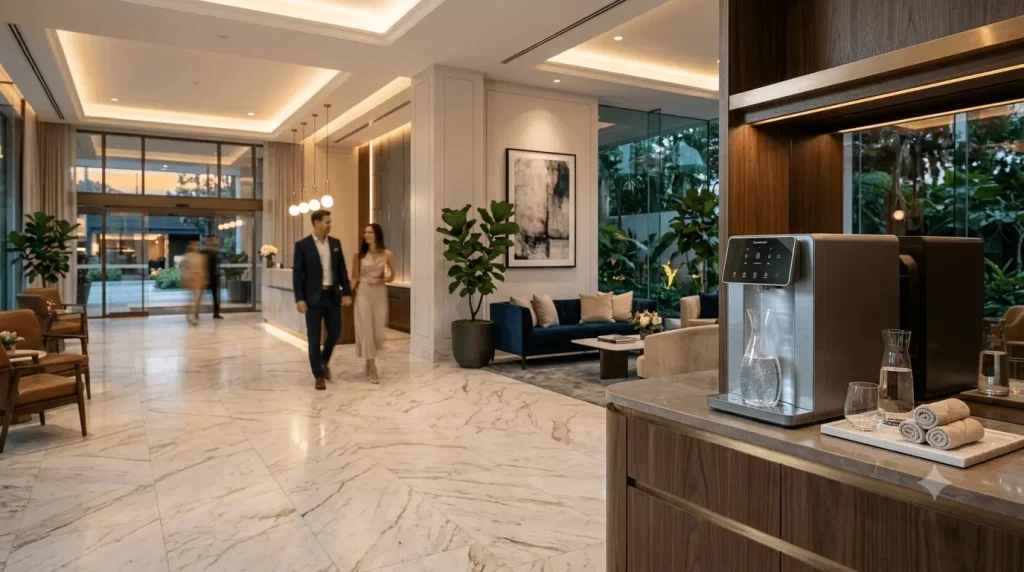
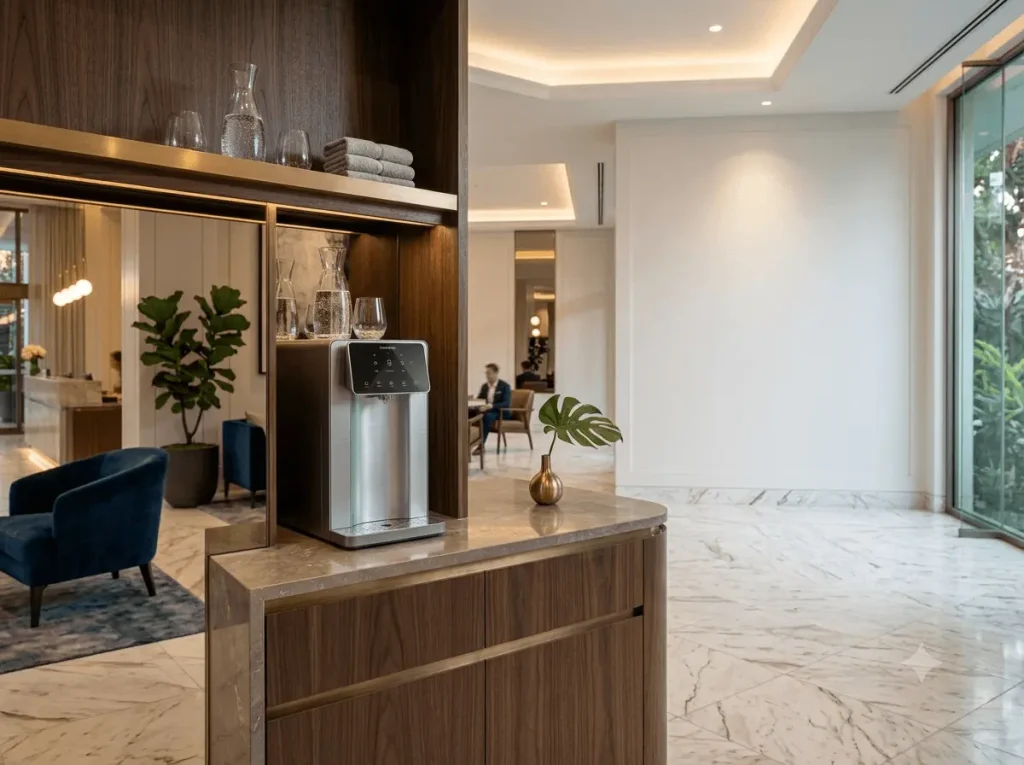
In hospitality, water touches almost everything a guest notices. It’s in the shower, the coffee cup, the ice in the glass, the towels and the glassware on the table. When it’s wrong, guests don’t say “the water is hard.” They say the towels felt rough, the coffee tasted flat or the glasses looked cloudy.
PG-Filetech supplies, installs and services water treatment for hotels, resorts, restaurants and cafes across Dubai. We look at your water first, then at the equipment that depends on it, and suggest only what makes sense for your property. A boutique cafe and a 300-room resort need very different setups, and we plan them that way.
Dubai’s supply is desalinated and treated, and it’s safe to use. The trouble is what happens after it enters your building. It sits in tanks, moves through long pipe runs and gets heated, and heat is what turns hardness minerals into scale.
Scale is the biggest one. It builds up inside boilers, calorifiers, dishwashers, coffee machines and pipework, and you rarely see it until something stops working. A boiler coated in scale needs more energy to heat the same water. A showerhead choked with it sprays unevenly, and housekeeping ends up scrubbing glass and chrome every day.
Guest experience is the second. Chlorine smell in the shower, dry skin and hair, spotted glasses, flat-tasting coffee and cloudy ice all come back to water quality. Guests rarely complain about it directly, but it shows up in reviews as small remarks about “something off.”
Equipment life is the third, and it’s where the money goes. Hard water shortens the life of laundry machines, warewashers, steamers and espresso machines. Repairs, descaling visits and early replacements add up quietly across a year.
Hotels use water at a scale that most buildings never see. Hot water runs round the clock, laundry runs daily, and every room has its own shower and tap. Treatment works best when it’s planned by area instead of one fix for the whole building.
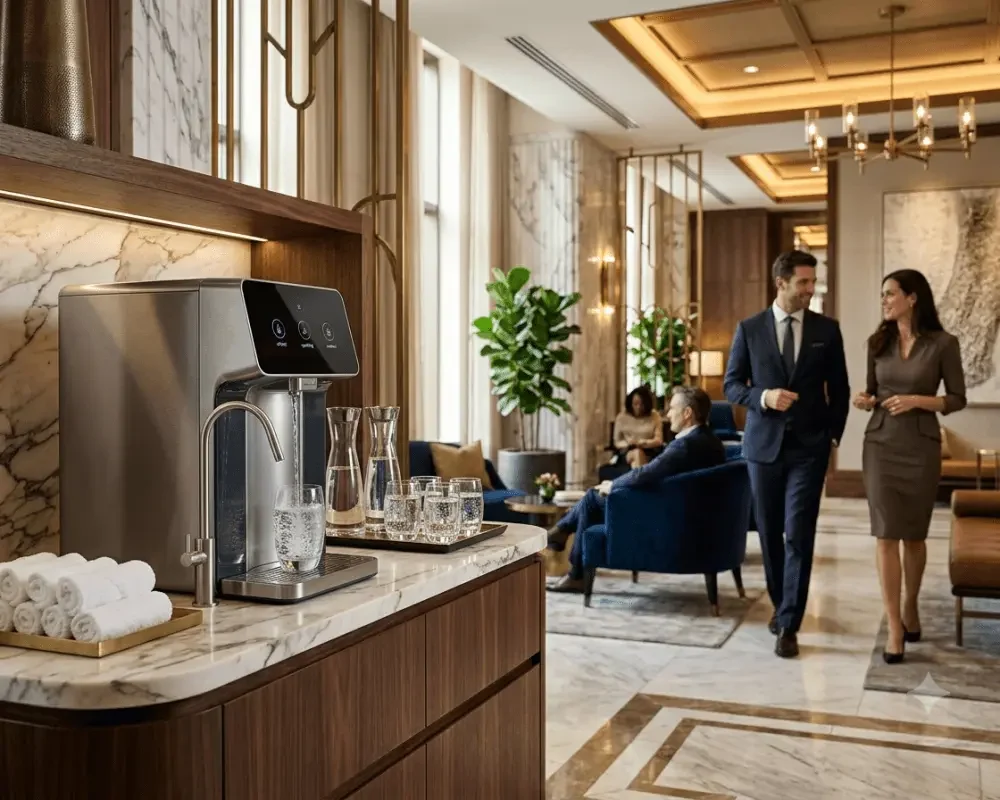
Laundry is where softening pays back fastest. Hard water makes detergent work harder, so you use more of it, and the minerals stay in the fabric. Towels turn stiff and grey, and sheets wear out sooner. With softened water, the same wash needs less detergent, and linen feels better and lasts longer.
Boilers and hot water plants benefit just as much. Scale acts like insulation inside the vessel, so the system burns more energy to deliver the same temperature, and it can block valves and heat exchangers. A softener on the feed water keeps those parts clean.
We size softeners by peak demand, not by room count. A resort with a large laundry and a spa needs a different unit from a city hotel that sends its laundry out. We’ll ask about your boiler type, laundry volume and water use before we recommend anything.
The shower is where most guests judge your water. Chlorine can leave a sharp smell and make skin and hair feel dry, and scale blocks showerheads and leaves marks on glass and fittings.
Options run from point-of-use shower filters in individual rooms to treatment at the riser or floor level. Room-by-room units are simple to fit and good for a few premium suites or a refurbishment. Treating water further up the line makes more sense for a full hotel, because there’s less to service. We’ll talk through both and look at your building layout, floor count and refurbishment plans.
Legionella is a bacteria that grows in warm, still water, and it spreads when people breathe in tiny droplets, for example from showers, taps, spas and cooling towers. Hotels carry more risk than most buildings because of long pipe runs, rooms that sit empty for days, large storage tanks and plenty of warm water.
Dubai Municipality publishes technical guidance on this. You can read its Technical Guidelines for Legionella Control in Water System on the Dubai Municipality website. Check that you’re reading the latest version, since the document is updated from time to time.
A few honest points from our side:
Water treatment equipment doesn’t replace a Legionella risk assessment or a water safety plan. A softener, filter or tank that’s poorly maintained or left standing can make things worse, not better. That’s why we place equipment so water doesn’t sit in dead legs, and we build cleaning and sanitising into the service schedule.
We work alongside your engineering team, and your appointed water safety specialist where you have one. Testing, risk assessment and control measures should follow the Dubai Municipality guidance and the requirements that apply to your property.
In a restaurant, water is an ingredient and a cleaning tool at the same time. It goes into coffee, soups, rice and ice, and it also runs through the dishwasher and the steamers. Small problems show up quickly because everything is used all day.
Espresso machines are sensitive to water. Scale builds in the boiler and group heads, and chlorine changes the flavour of the shot. A filter on the machine’s feed line removes chlorine, slows scale and keeps the taste steady from one service to the next. Many machine makers specify a water range for warranty purposes, so tell us your model and we’ll match the filter to it.
Ice machines are easy to forget. They run constantly, and the water they use ends up in your guests’ drinks. Hard water makes cloudy ice and scale inside the machine. Chlorine or odd tastes carry straight into the glass. A filter on the supply line gives you clearer, cleaner-tasting ice and protects the machine. Cartridges usually need changing about twice a year, though the right interval depends on your water and the manufacturer’s advice.
In the kitchen, hard water shows up as scale in combi ovens and steamers, white film on pots and cloudy glassware straight out of the dishwasher. Staff then re-polish glasses by hand, which costs labour and slows service.
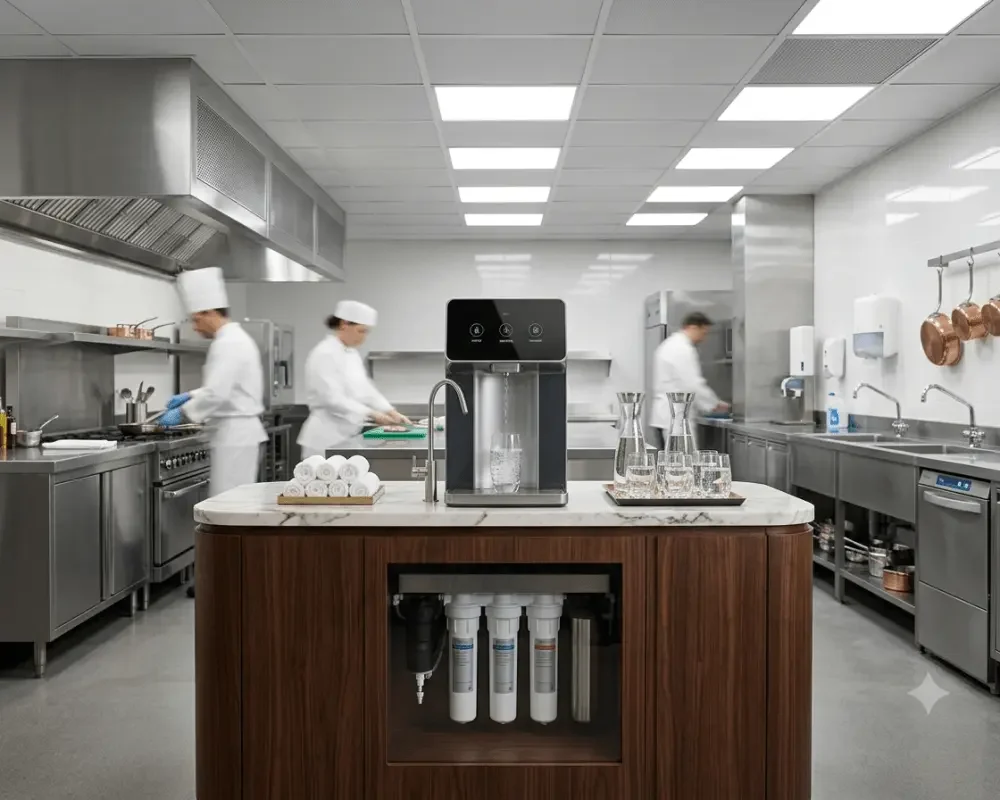
Softened or treated water lets warewashers rinse cleanly with less chemical use. Steamers and combi ovens last longer because they aren’t coating themselves in scale. Where drinking water for guests is served from the tap or a filtered dispenser, we can add carbon filtration or RO for taste.
A small cafe might only need a filter on the coffee machine and one on the ice maker. A restaurant with a full kitchen may need a softener on the main line. We’ll tell you which one fits.
Most hospitality owners look at water treatment as a cost. It’s closer to maintenance. The savings come from several places at once:
It’s hard to give a standard figure, because it depends on the property. The better way is to look at your own numbers: descaling visits, repair invoices, detergent use and energy bills. If you share a year of those with us, we can show where treatment would make a difference and whether it’s worth doing.
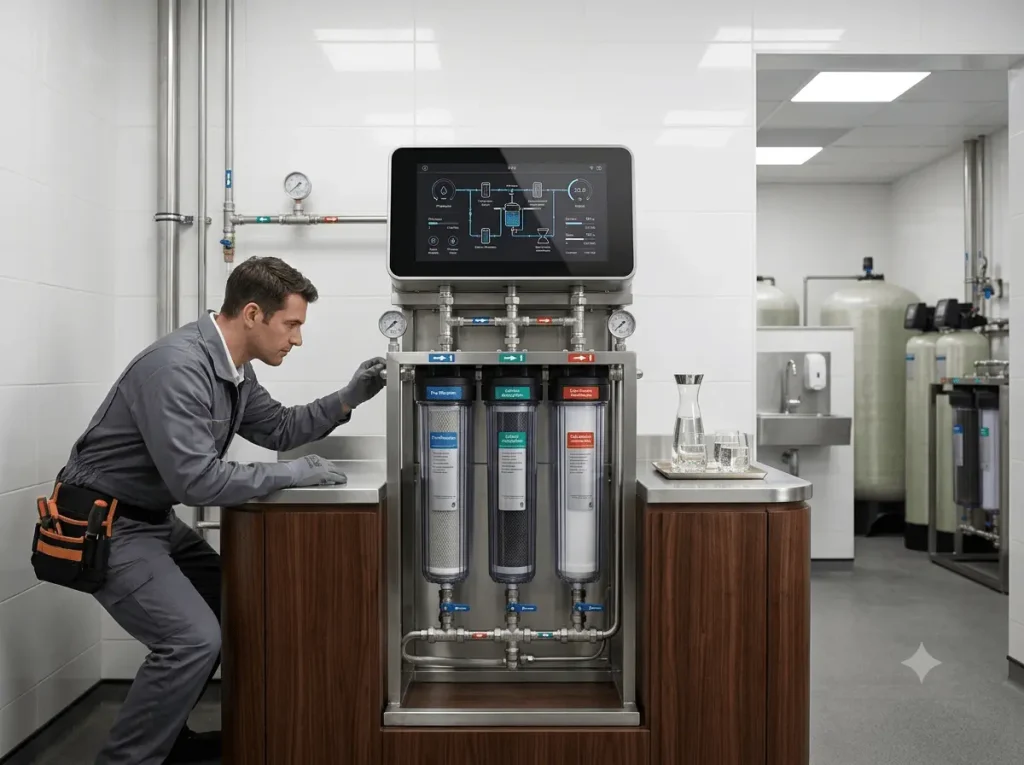
Treatment only works while it’s looked after. Softener resin needs regenerating and checking. Carbon filters get used up. RO membranes wear out. In a busy hotel or restaurant, nobody has time to track that, so we do it for you.
A service programme from PG-Filetech is set up around your property. It normally covers scheduled visits, replacement of filters and cartridges, softener checks, sanitising and water testing, plus a written record of each visit that your engineering or compliance team can file. If something fails between visits, you can call us for a repair visit.
How often we visit depends on the equipment and how hard it works. A resort’s central softener plant is serviced differently from a cafe’s coffee machine filter. We agree the schedule at installation and send a reminder before each visit.
Hard water contains dissolved calcium and magnesium. When it’s heated or dries, these minerals form scale. That scale clogs boilers, coffee machines, dishwashers and showerheads, and it leaves marks on glass and fittings.
Most hotels benefit from one, especially if they run a laundry or a large hot water system. The size and type depend on your water use, boiler setup and building layout. A site visit settles it.
No. Treatment equipment doesn’t remove the need for a Legionella risk assessment and a water safety plan. Poorly maintained equipment can add risk, which is why servicing and sanitising matter. Follow the guidance from Dubai Municipality and work with your water safety specialist.
Dubai Municipality publishes its Technical Guidelines for Legionella Control in Water System on its website. We’ve linked it in the Hotels and Resorts section above.
It depends on the machine and your water. Most setups use a carbon-based filter, sometimes with scale control. Send us the make and model and we’ll match the filter to the manufacturer’s recommended water range.
Often about every six months, but follow the manufacturer’s advice and your water quality. Under a service programme, we change it on schedule.
Yes. We plan around your operation and can work early morning, late evening or in quiet periods. For hotels, we coordinate with engineering and housekeeping.
In many cases, yes. We inspect it first and tell you honestly if it’s worth keeping or replacing.
Contact PG-Filetech to book a site visit for your hotel, restaurant or cafe.
info@pg-filtech.com
24/7 customer support